When the EPA trumpeted the findings of the Southwest Research Institute earlier this year, it didn’t mention the founder’s quest for Yeti or his ties to the CIA.
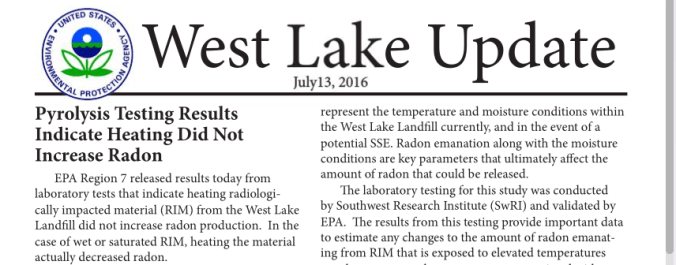
In July, EPA Region VII announced that the prestigious Southwest Research Institute in San Antonio had analyzed soil samples from West Lake Landfill and found that heating dirt from the radioactively-contaminated dump in a laboratory setting had not increased dangerous radon levels.
Community activists were not assured by the pronouncement, however. They are still demanding an expedited cleanup of the long neglected site in North St. Louis County and continue to question attempts by the press and the EPA to downplay the problem posed by the nuclear weapons waste.
For its part, the EPA has cast the debate as one that pits the dismissive opinions of its so-called scientific experts against the public’s perception of risk, which they contend is based on rumors and misinformation.
A good argument could be made, however, that rumors and misinformation is the stuff from which the Southwest Research Institute spawned.
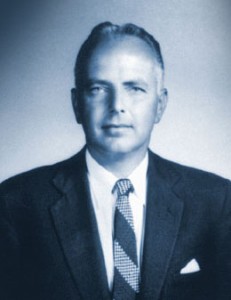
The late Tom Slick Jr., founder of the Southwest Research Institute, believed in the existence of the Yeti, aka, the abominable snowman; and he spent a considerable amount of time and money attempting to prove the creature was a reality.
You read correctly: One of the top government-approved research facilities in the country, with a revenue exceeding $500 million in 2015, was established by a bonafide cryptozoologist, a true believer, who spent years chasing after the abominable snowman, the subject of derision among generations of serious scientists who scoff at the idea and label it nothing more than pure science fiction.
It’s enough to give pause, when the EPA asserts that its contractors hold a monopoly on irrefutable scientific facts.
But there’s more.
When he wasn’t chasing Bigfoot or giant Alpine salamanders, Slick operated a CIA air cargo company in his spare time, while managing his oil and cattle empire.
Apparently, the same curiosity and fervid imagination that fueled his search for monsters drove him to start up the research center in 1947. He subsequently bankrolled two expeditions to the Himalayan Mountains of Tibet in search of the legendary, hirsute biped.
The Tom Slick Foundation still helps support the Southwest Research Institute.
Slick also endowed the Tom Slick Professorship of World Peace at the University of Texas, where former EPA Region 7 administrator Karl Brooks now teaches.
Slick also went on a trek to the Canadian Northwest in search of the Yeti’s North American cousin, Bigfoot. Before either of these quests, Slick, while still in college at Yale, journeyed to Scotland to investigate the legendary Loch Ness monster.
Slick inherited his wealth from his father, a wildcatter who struck black gold during the Oklahoma oil rush of the 1920s.
In the 1950s, Slick and his brother operated Slick Airways, a CIA air cargo company that operated in Asia before the notorious Air America of the Vietnam era.
There is speculation that Slick’s Tibetan expeditions were covers for covert CIA operations to gather intelligence on Chinese hegemony in the region.
His friends and associates included eccentric billionaire Howard Hughes and Hollywood actor Jimmy Stewart.
Slick, an avid pilot, died when his small plane crashed on a return flight from a Canadian hunting trip. He was 46 years old.
A planned feature film, Tom Slick, Mystery Hunter, starring Nicholas Cage was shelved in the 1990s.
When cyclists spin their wheels this weekend to commemorate the illegal dumping of radioactive waste at West Lake Landfill, they’ll be riding over a very hot roadbed.
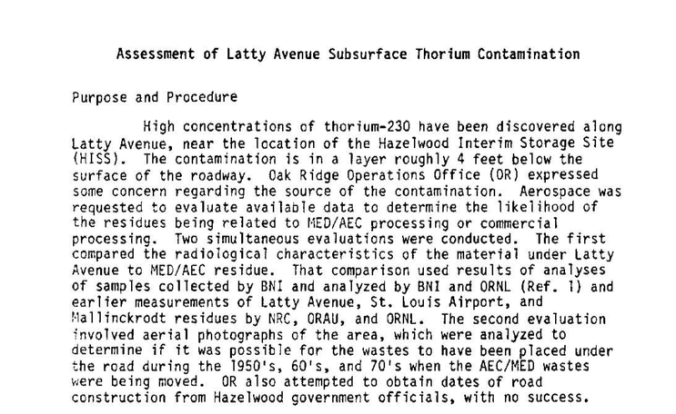
The Latty Avenue roadbed in Hazelwood, Mo. is constructed of highly radioactive nuclear weapons waste, according to an overlooked Department of Energy document uncovered this week by the Environmental Archives.
Just hot is it under Latty?
In 1987, Aerospace Corp., a DOE contractor, reported the levels of radiation in one hot spot under Latty Avenue were literally off the charts.
“Activities in the “hot spot” sample were so high that quantitative determinations using initial analytical techniques were not possible, and further analyses (sic) will be required,” according to the then-DOE contractor.
The online database released the revelation along with a cache of other records obtained through the Freedom of Information Act.
The release of the document coincidentally corresponds with a planned ride by bicyclists this Saturday to draw attention to St. Louis’ longstanding radioactive waste problem.
Tons of radioactively-contaminated materials at the Latty Avenue site were transported and illegally dumped at the West Lake Landfill in 1973 over a three-month period.
More than four decades later, the waste is still there, which has led in recent years to a fight by community members to get the EPA to relinguish control of the site to the U.S. Army Corps of Engineers.
The Corps has cleaned up the former storage area on Latty Avenue and other sites in the St. Louis area as a part of the Formerly Utilized Site Remedial Action Program (FUSRAP).
But the haul route contamination, for the most part, has not been addressed because it allegedly falls below the current clean-up standards set by the Corps. Radioactive contamination that lies under the pavement is now deemed as safe.
In 1987, it was a different story, however, according to the DOE report made public by the Environmental Archive. At that time, the Aerospace Corp., a DOE contractor, expressed concerns over the high levels of Thorium 230 used to construct the Latty Avenue roadbed.
The report concludes that the radioactive materials used to build the road in the 1960s or 1970s most likely came from processing waste generated by the Mallinckrodt Chemical Works of St. Louis under contracts with the top secret Manhattan Project and later the Atomic Energy Commission. Analysis revealed that the high levels of Thorium 230 were evidence that the radioactive contamination was a byproduct of Congolese pitchblende, which is known to be the hottest uranium ore on the planet.
The pitchblende refined by Mallinckrodt was used to build the first atomic bombs.
In 2014, a mystery man accompanied the EPA to the Bridgeton Municipal Athletic Complex . He refused to identify himself, leaving in his wake a gulf of government unaccountability and widening public doubt .
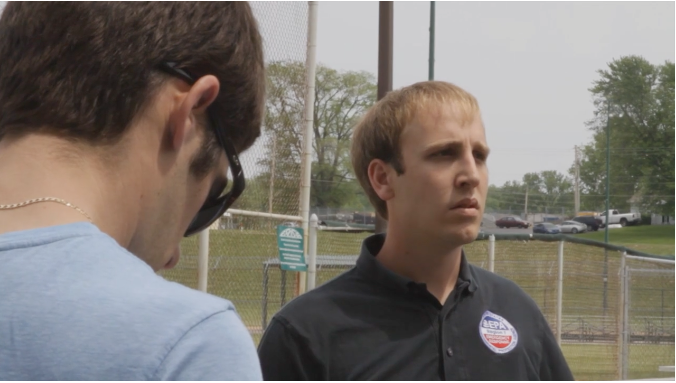
The man in the center of the photograph above is EPA on-scene coordinator Tom Mahler of Region 7. The picture was taken in May 2014 when Mahler and other EPA officials began testing the Bridgeton Municipal Athletic Complex for radioactive contaminants.
The agency later announced that it had found evidence of contamination but not enough to warrant concern, according to its guidelines.
The EPA had reached this conclusion before they arrived at the site, however. Because weeks earlier then-regional EPA administrator Karl Brooks had pronounced the ballfields safe at a press conference at Bridgeton City Hall.
Brooks claimed that the EPA had science on its side.
In essence, EPA had reached its findings first and then verified them later. That’s not how the scientific model works. The EPA is supposed to operate with transparency and on behalf of U.S. citizens, too. But that didn’t happen in this case, either.
The man in the blue T-shirt and sunglasses, with his back to camera, chose to remain anonymous that day. When asked by filmmakers to identify himself, he refused. He also refused to say for whom he worked.
The survey was being paid for with taxpayer dollars. The EPA, a public agency charged with protecting our shared environment was conducting testing on publicly-owned property to protect public health — and the guy in the shades would prefer not to be recognized as being present for the occasion.
It is unknown if he worked for an EPA contractor or another government agency. His identity remains unknown. The purpose for being there that day remains a mystery.
He’s the man who wasn’t there.
This frozen frame represents a moment in time. It is among the hundreds of hours of footage shot to make The First Secret City, a documentary that exposes a history of denial and neglect that originated with the Manhattan Project and continues today.
The next screening of the film will be at 7:00 p.m. Wednesday Sept. 14 at the University of Missouri St. Louis.
The EPA’s recent tests of West Lake nuke waste are not unprecendted. Sixty-five years ago the AEC published a recipe by Mallinckrodt Chemical Works on “roasting” pitchblende.
“If you can’t stand the heat, get out of the kitchen” is President Harry S Truman’s most noted quip. But Truman is remembered more for actions than words.
He ordered the atomic bomb attacks on Japan that ended World War II. Much of the uranium used in those bombs came from African pitchblende ore and was processed by Mallinckrodt Chemical Works of St. Louis. The classified work continued during the Cold War nuclear arms race that followed. As a result, radioactive waste was haphazardly strewn at sites across the region for 20 years.
Embers of that fateful era are still burning today in North St. Louis County, where leftovers from the Manhattan Project remain a topic of heated discussions.
“Heat” is exactly what the Southwest Research Institute in San Antonio applied in its laboratory experiments earlier this year. The purpose of research was to determine whether uranium waste from the makings of the first atomic bombs — dumped decades ago at the West Lake Landfill — threatens to release harmful radon gas if exposed to increased temperatures.
Spurred by public concern, the EPA commissioned the study to see what would occur if the underground fire raging at the adjacent Bridgeton Landfill met the radioactively-contaminated materials (RIM) buried at the West Lake Superfund site. The question has been smoldering since December 2010, when landfill owner Republic Services reported the hellish conditions.
The good news, according to the EPA, is that the tests confirmed that baking RIM does not increase radon gas emissions and in some instances decreases them. Community activists have hotly contested those findings, questioning whether the simulated laboratory conditions are comparable to the real fire in the hole.
The latest assurances appear to be another attempt to stem the firestorm of public distrust that surrounds the topic. Meanwhile, the subterranean smoldering event, as the EPA prefers to call it, continues to burn closer to the RIM.
As the sparks from this drama inevitably create more smoke than light, it should be kept in mind that the flouted tests are not the first to measure the effects of heat on pitchblende. That distinction goes to the Atomic Energy Commission, which published a Mallinckrodt report on the subject in December 1950.
The title of the 65-year-old tract, “The Roasting of Pitchblende Ore,” seems more applicable to a macabre cookbook than a scientific treatise. It also conjures up a combination of Arthurian alchemy and biblical fire and brimstone.
Brimstone is the ancient word for sulfur.
Up to ten percent of the content of the pitchblende ore was comprised of sulfur, according to the Mallinckrodt study. In the 20th Century, the Mallinckrodt scientists were not concerned about the health impact of the sulfur or radioactive materials for that matter. Instead, they theorized that removing the sulfur by cooking the pitchblende would save the company money and increase profits.
Bridgeton Okayed Monsanto Burning Toxic Waste at West Lake Landfill in 1969
When the West Lake Landfill in Bridgeton, Mo. is mentioned nowadays, it is most often associated with radioactive waste produced by Mallinckrodt Chemical of St. Louis, and the underground fire raging nearby. But records uncovered by STL Reporter indicate another locally-based chemical behemoth had earlier burning desires for the West Lake property.
Bridgeton City Council minutes from May 7, 1969 state that representatives of the Monsanto Chemical Co. asked the council to approve an application for a permit to run a pilot plant at the West Lake Quarry. The quarry and the landfill were then two parts of the same operation.
Monsanto spokesmen Evan Robert and Ted Bielski told the council that Monsanto had formed a new business enterprise earlier that year to address an array of pollution problems. The plant would “heat material in enclosed chambers and the residue will come out a sterile product,” according to the council minutes.
At the same meeting, the St. Louis County Health Commissioner told council members that the county had already issued an air pollution permit for the pilot plant, which was expected to operate for the remainder of 1969.
The minutes lack details of the proposed plant, but appear to outline plans for Monsanto to operate an incinerator at the location.
Prior to presenting the proposal to the council, Monsanto would have almost certainly have negotiated an agreement with West Lake’s owners. West Lake’s operation already included a cement kiln, which could also have served as a possible waste incinerator.
Councilman Edward Boenker, the owner of an adjacent farm, asked whether Monsanto intended to use waste from the landfill. The minutes do not indicate whether the company representatives responded to the question.
But ten months later, it’s clear the incinerator was up and running at the site. A St. Louis Post-Dispatch story on March 15, 1970 includes a photograph of the incinerator and says that trash being hauled to the landfill was being burned in the incinerator.
A Monsanto subsidiary — Enviro-Chem — used an experimental process referred to as “pyrolysis” to burn the waste and then capture and burn the resulting gases.
“All that is left after the burning of the trash, spokesmen for Enviro-Chem say, is dirt, rock or glass that were present in the original composition. These by-products can be used, they say, for land fill,” the Post-Dispatch reported. The story said the company was considering using the gas emissions from the process to generate energy.
“D.L. Chapman, director of the solid pollution control department of Enviro-Chem, said that a decision would be made by this year (1970) whether to try to market the company’s process,” the news story said.
At the Bridgeton City Council meeting in 1969, the Monsanto representatives said that “the end result will be a totally sterile landfill,” according to the council minutes. They estimated that the pilot plant would treat between 50 and 100 tons daily. Nothing in the document says specifically what kinds of wastes would be treated. But the Monsanto representatives did describe the end product as “sterile,” which suggests that the untreated waste was harmful.
In the late 1960s, Monsanto produced a component of Agent Orange, a defoliant used by the U.S. military during the Vietnam war. Dioxin, is a toxic waste byproduct of Agent Orange. The EPA later discovered that dioxin contaminated the town of Times Beach, Mo. and dozens of other sites in Eastern Missouri and incinerated it. The clean-up of those sites took decades to complete.
Monsanto also did work for the Atomic Energy Commission during the Cold War at Clinton Laboratories in Oak Ridge, Tenn. and Mound Laboratories in Miamisburg, Ohio.
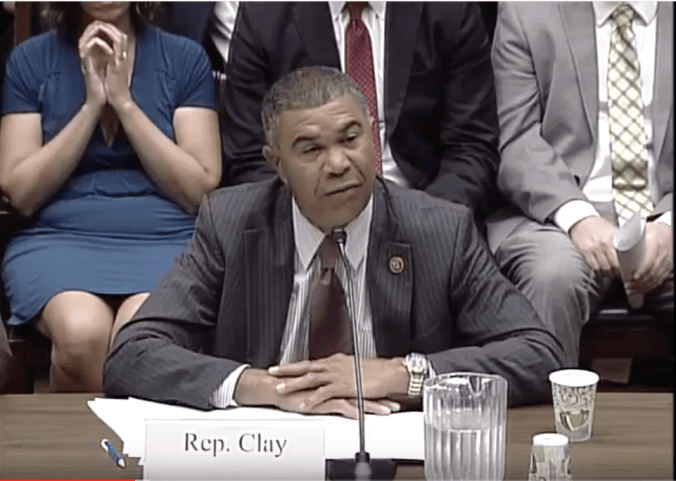
Congressmen Clay and Wagner take aim at a legislative roadblock that has stalled efforts to expedite the West Lake Landfill clean up.
In a rare showing of bi-partisan cooperation yesterday, two members of the St. Louis congressional delegation demanded the U.S. Army Corps of Engineers be put in charge of the radioactively-contaminated West Lake Landfill clean up in Bridgeton, Mo.
Seated at the same table in room 2123 of the Rayburn House Office Building, Rep. Ann Wagner (R- Mo. 2nd Dist.) and Rep. William “Lacy” Clay (D- Mo. 1st Dist.) made impassioned appeals to their colleagues on the Environment and the Economy Subcommittee to allow a floor vote on the bill that would shift control of the site to the Corps.
” The EPA has failed for more than 30 years in its clean up of nuclear waste dating back to the Manhattan Project and World War II,” Wagner said. She characterized the agency’s inaction as “heartless.”
Wagner added that the EPA essentially carried out a cover up of policy recommendations pertaining to West Lake.
” In June of this year, [a] document released by the National Remedy Review Board in 2013 was released by the EPA stating that removing radioactive waste at the landfill was feasible and could reduce long-term risks, contradicting the EPA’s earlier decision to leave the waste in place and capping [it],” said Wagner. “The fact that this 2013 document has not been available before last month shows the lack of transparency and accountability that the EPA has demonstrated throughout this entire process.”
Wagner said that belated testing by the EPA has revealed “radioactive material is consistently found outside the known contaminant area, bringing considerable doubt in EPA’s management of the site while pushing back the timeline for action.”
“Despite the seriousness of the situation,” said Wagner, “the EPA has still not made a decision about what to do with the waste, pushing back their self-imposed deadline for releasing a decision time after time, and year after year.”
In demanding that West Lake be turned over to the Corps, Wagner said the EPA has had 25 years to resolve the problem without success. “They have delivered zero results!” said Wagner. “The agency has undoubtedly lost the trust of the community and has lost my trust as well!” said Wagner, pounding her fist of the table.
When it came his turn, Rep. Clay was no less adamant.
The legislation has been stalled in the subcommittee for months due mainly to the opposition of Rep. Frank Pallone, (D-N.J.-6th Dist.), the ranking minority member on the panel. Pallone walked out of the hearing while the two Missouri congressmen were speaking.
In his address, Clay alleged that unnamed political opponents on the subcommittee were holding up the bill. “Some of the forces that want to keep this nuclear waste in the unlined West Lake Landfill ganged up to stop it. I’m greatly disappointed that this common sense bill has been delayed, obstructed and even deliberately misrepresented by some staff and certain members of this committee,” said Clay. “After 74 years of negligence by the U.S. government that is totally indefensible.
“The bill before you was crafted with strong grassroots support by the Missouri Coalition for the Environment, Just Moms St. Louis … and many other civic and environmental activists to address a 74-year-old nuclear legacy, which has subjected families to fear and suffering … too long,” said Clay.
“The nuclear waste that was generated from the manufacturing of those original atomic bombs and others that would follow forged a curse of radioactive contamination that is still inflicting pain and suffering on our constituents today,” said Clay.
Clay listed a litany of radioactive contaminants and other toxic waste that are present at the landfill near the Missouri River, a major hospital, the St. Louis airport, schools and Interstate highways. “Most troubling of all is the appalling fact that 1,000 of our constituents live less than a mile away from this illegal nuclear waste dump,” Clay said.
“The truth is that if you searched far and wide across this country it would be almost impossible to find a dumber, more dangerous, more completely irresponsible place to dump nuclear waste,” Clay said.
“And if you think this situation couldn’t get any worse, you’re wrong,” said Clay. “For the last four years, we’ve also been dealing with a creeping, underground landfill fire at the adjacent Bridgeton sanitary landfill, which is under the control of the Missouri Department of Natural Resources. That underground fire is less than 1,000 feet from the buried nuclear waste,” Clay said.
“The U.S. government created this radioactive mess,” Clay declared. “We have a clear and unavoidable responsibility to finally clean it up. … Our legislation builds on the highly successful track record of FUSRAP, which is already cleaning up the same nuclear waste at other sites around St. Louis. It is fiscally responsible because even after the transfer of the West Lake Landfill the site would remain on the [EPA’s] Superfund list, which would preserve revenue streams to help fund the clean up from several responsible parties, including the Department of Energy, Republic Services and Cotter Corp.
“This bill has earned the bi-partisan support of Democrats and Republicans, religious coalitions, community activists, and respected scientific sources, who believe that a clean up like this should be put in the hands of those who have the strongest possible expertise in cleaning up nuclear waste,” Clay said.
A companion bill has already passed in the U.S. Senate with the bi-partisan support of Sen. Roy Blunt (R-Mo.) and Sen. Claire McCaskill (D-Mo.).
Both the House and Senate bills call for the Corps’ Formerly Utilized Sites Remedial Action Program (FUSRAP) to take charge of the West Lake Superfund site from the EPA, which has had responsibility for the clean up since 1990 and failed to achieve its goals.
In a statement submitted to the committee, an Army Corps official questioned taking over the clean up because of budgetry constraints. She added that the switch would also delay remediation.
Congress delegated FUSRAP with the authority to clean up other radioactive waste sites in the St. Louis region decades ago. The contamination was the result of uranium waste byproducts generated by the Mallinckrodt Chemical during World War II and the Cold War. For reasons that remain unclear, West Lake was excluded from the program and instead put under the control of the EPA in 1990.
Mallinckrodt worked under contract with the top-secret Manhattan Project beginning in 1942 to help produce the first atomic bombs. The company continued its work under the Atomic Energy Commission (AEC) after World War II until 1968. During this time, multiple sites were contaminated in the bi-state area.
An estimated 50,000 tons of radioactively-contaminated dirt was illegally dumped at West Lake in 1973 by B&K Construction, a subcontractor of the Cotter Corp., which had purchased the materials earlier from the AEC. The AEC learned about the dumping the following year, but took no action to remove it.
The radioactive waste has been leaking into the ground water in the Missouri floodplain for more than 40 years.
In May, the St. Louis Post-Dispatch, despite all the evidence to the contrary, reported that community concerns over the landfill and radioactive contamination of nearby Coldwater Creek were exaggerated, labeling them as “misplaced fears.” The newspaper’s coverage of the July 13 subcommittee hearing omitted almost all of the congressmen’s testimony and instead focused on the Corps statement that it lacked the funds to take over the project and that a switch now would delay the clean up.
When the Rev. Gerry Kleba became senior associate pastor of Immaculate Conception Catholic Church in Dardenne Prairie, Mo. in 1999, he found many of his suburban parishioners were plagued by an unusually high infant mortality rate. Babies were dying from rare forms of cancer. He soon discovered Dardenne Creek is downstream from a former uranium processing plant operated for the Atomic Energy Commission by Mallinckrodt Chemical of St. Louis. His concerns spurred him to challenge the findings of state health officials and demand a comprehensive epidemiological study of the area. His efforts met resistance from housing developers, regional economic interests and the federal government. In this clip from the documentary film The First Secret City, Kleba summarizes the challenges of confronting the nuclear power structure.
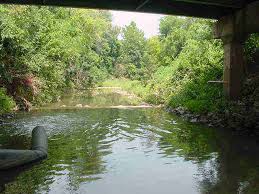
A cancer victim asks me for answers to the festering radioactive waste issue in North St. Louis County.
Last night before the screening of the First Secret City at Saint Louis University, a woman came up to me and showed me a long, deep scar on the bicep of her left arm. Even though her skin was black, I could clearly see the severe bruising she has from her most recent radiation treatment.
She is 44 years old and has leiomyosarcoma, a rare cancer that I can’t pronounce.
The woman pulled out her I-phone and showed me how to spell the name of the disease that is ravaging her body. I had to borrow a pen and a piece of paper from her so I could jot down the spelling.
One of the causes of leiomyosarcoma is exposure to ionizing radiation. But her doctors won’t say whether that’s the cause of her life-threatening condition.
She has lived in Florissant, Mo. since she was three years old. Her family home is next to Coldwater Creek, which is known to be contaminated with atomic weapons waste dating back to World War II.
She told me that she didn’t sign up for this.
She didn’t volunteer to be a victim of the U.S. military’s secret nuclear weapons program. She asked me for answers.





 The first secret city